Monday 11/23:
Please make sure that you have read the documents and answered the question. You should make a t-chart.."why Europe? Why not China?"
Friday, November 20, 2015

Friday, November 13, 2015
PERIOD 2--HANDOUTS--Print and complete questions for Monday 11/16
“When the coin in the coffer rings,
the soul from purgatory springs”- Johann Tetzel, Catholic German preacher,
c.1517
- What common practice of the Catholic church does
the above quote signify?
Luther preached a message of “justification by faith” based on
Biblical scripture. The following is a summary of his teachings taken from an
article published in 1537.
The first and chief article is this: Jesus Christ, our
God and Lord, died for our sins and was raised again for our justification
(Romans 3:24-25). He alone is the Lamb of God who takes away the sins of the
world (John 1:29), and God has laid on Him the iniquity of us all (Isaiah 53:6). All have
sinned and are justified freely, without their own works and merits, by His
grace, through the redemption that is in Christ Jesus, in His blood (Romans
3:23-25). This is necessary to believe. This cannot be otherwise acquired or
grasped by any work, law or merit. Therefore, it is clear and certain that this
faith alone justifies us ... Nothing of this article can be yielded or
surrendered, even though heaven and earth and everything else falls (Mark 13:31).
1. After studying the above quote, what consequences do you think
this would have on the Catholic Church and its followers? Why?
John Calvin was a French Protestant theologian during the Protestant
Reformation and was a
central developer of the system of Christian
theology called Calvinism or Reformed theology. The Biblical passages
are commonly used to define his teachings.
Ephesians 2:4 But God, being rich in mercy, because of
the great love with which he loved us, 5 even when we were dead in our trespasses,
made us alive together with Christ—by grace you have been saved— 6 and
raised us up with him and seated us with him in the heavenly places in Christ
Jesus, 7 so that in the coming ages he might show the immeasurable riches
of his grace in kindness toward us in Christ Jesus. 8 For
by grace you have been saved through faith. And this is not your own doing; it
is the gift of God, 9 not a result of works, so that no one may boast.
Romans 9:15 For he
says to Moses, “I will have mercy on whom I have mercy, and I will have
compassion on whom I have compassion.” 16 So then it depends not on
human will or exertion, but on God, who has mercy.
2. What is the term applied to this theology and what are some
clues from the passages that suggest that?
Renaissance
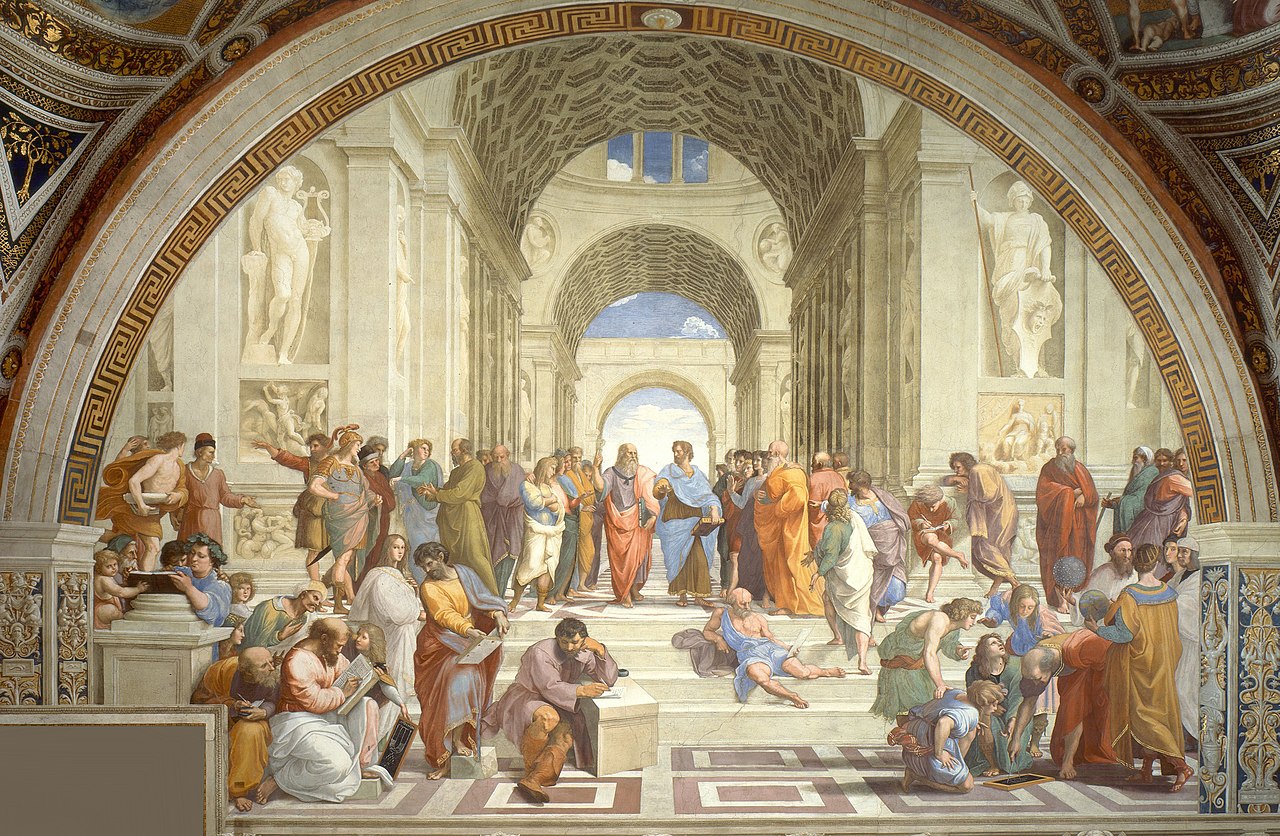
Do you know the
name of this piece of work?
What is the artist trying to portray?
How does this show the ideas of
the Renaissance?
What are the “isms” of the Renaissance?
(Hint: there are 4)
Absolutism
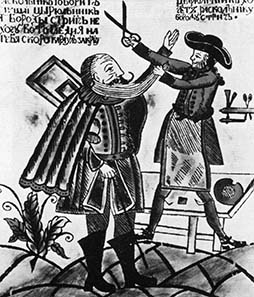
King Louis XIV is
quoted as saying “L’etat, c’est moi,” or “I am the state,” believing he was the
only one responsible for governing France.
|
|
2. -“I am aware that a philosopher's ideas are not subject
to the judgment of ordinary persons, because it is his endeavor to seek the
truth in all things, to the extent permitted to human reason by God.”
3. “The Milky Way is nothing else but a mass of innumerable
stars planted together in clusters.”
4. “The Bible shows the way to go to heaven, not the way the
heavens go.”
5. “I
must altogether abandon the false opinion that the sun is the center of the
world and immovable, and that the earth is not the center of the world, and
moves, and that I must not hold, defend, or teach in any way whatsoever,
verbally or in writing, the said false doctrine, and after it had been notified
to me that the said doctrine was contrary to Holy Scripture.”
6.
“If I have seen further than
others, it is by standing upon the shoulders of giants.”
Week of 11/16-11/20
Monday 11/16
1. Read and answer the questions in the packet for the Reformation, Renaissance, absolutism, and Scientific Revolution.
2. We will fill out the organizer in class.
3. If you have not read the packet make sure that it is complete for tomorrow!
Tuesday 11/17
1. Assignment #1 DUE
Wednesday 11/18
1. Assignment #2 DUE
Thursday 11/19
Friday 11/20
1. Assignment #3 DUE
1. Read and answer the questions in the packet for the Reformation, Renaissance, absolutism, and Scientific Revolution.
2. We will fill out the organizer in class.
3. If you have not read the packet make sure that it is complete for tomorrow!
Tuesday 11/17
1. Assignment #1 DUE
Wednesday 11/18
1. Assignment #2 DUE
Thursday 11/19
Friday 11/20
1. Assignment #3 DUE
Textbook Questions 1450-1750
Name____________________________________ WHAP
Assignments:
1450 CE -1750 CE (Period 4)
|
#
|
Assignments
|
Due Date
|
|
1
|
·
Read and Outline pages 354-361 and complete the following:
o Create three 4-choice multiple-choice
questions. Provide the answer with a
clear explanation (make sure you include appropriate historical evidence in
your explanation).
o
Create
a comparative essay question.
|
11/17
|
|
2
|
·
Read pages 363-380 and answer the following questions in
detail:
o
Describe the impact of the Renaissance on European society.
o
Describe the two Reformations and the effects they had on
Europe & Explain whether the impact on Europe was pos/neg or both—give
examples.
o
Describe the Scientific Revolution that took place in
Europe (Who were the major players, effects on European society, etc)
o
How did European government, attitude towards government
and state structures change during this time period?
o
What changes were occurring in European social structures,
gender relationships and families & Why were these changes taking place?
o
Describe the Enlightenment and how it effected European
society?
o
By 1750, Why was
|
11/18
|
|
3
|
·
Read and Outline pages 383-402 (Take into consideration
the following questions):
o
How did Western Europe (between 1450-1650) gain
“unprecedented” mastery of the worlds oceans?
o
Describe the early efforts of Portugal and Spain to
explore the world and what areas did each control and why?
o
What was the Columbian Exchange and how did it effect both
Europe and the
o
What
areas remained outside the new global economy prior to 1600? What areas were added in the 17th
century?
o
How
did British and French North America differ from other European colonies?
o
What
were the results of the creation of a world economy?
|
11/20
|
|
4
|
·
Read and Outline 421-447 (Take into consideration the
following questions):
o What aspects of Iberian society were
transferred to the New World?
o What model for America colonization
was established in the Caribbean?
o Discuss the nature and impact of the
conquest and exploitation of Indians in the Americas.
o Why was silver considered to be the
”heart of empire”?
o Discuss the varied economies of the
American colonies.
o Explain what Spanish colonial rule
“looked like”.
o Create an illustration showing the
social hierarchy of Iberian society.
|
11/23
|
|
5
|
·
Read pages 477-500 and complete the following:
o
Write
an outline for a book titled, “Exploration and Penetration of Africa for
Dummies”. (Write from the point of
view of the Portuguese)
o
Trace
the changes in the volume of the Atlantic slave trade between 1450 and 1850.
o
Discuss
the demographic impact of the African slave trade on the sub-Saharan region.
o
What
was the social structure of American slave-based societies?
o
Why
did the Atlantic slave trade come to an end?
|
|
|
6
|
·
Exploration Assignment
|
|
|
7
|
·
DBQ Assignment
|
|
|
CONTINUED ON THE BACK!!!
|
||
|
#
|
Assignments
|
Due Date
|
|
8
|
·
Read and Outline pages 503-528 (Take into consideration
the following questions):
o
Explain
the three major zones of the Asian sea-trading network.
o
What
did the Portuguese discover when they arrived at Calicut and how did they
respond?
o
How
were the Dutch able to displace the Portuguese? How was their participation
in the Asian trading system different from the Portuguese?
o
Where
did the European establish tribute systems?
o
To
what extent were European Christian missionary efforts in the early 1660s
successful?
o
How
did the Ming restore the traditional Chinese forms of government?
o
Why
did the Chinese withdraw from commercial expansion?
o
What
steps led to the restoration of the Japanese shogunate?
o
Why
did the Japanese resort to isolation as a response to European expansion?
|
|
|
9
|
·
Read and Outline pages 449-474 (Take into consideration
the following questions):
o
Compare
and Contrast the three “Muslim Empires” (What were the similarities and
differences)
o
What
were the causes of Ottoman decline in the 17th century?
o
What
were the similarities and differences in the decline of the Abbasid and
Ottoman empires?
o
Compare
and Contrast the social and economic organization of the Ottomans and the Safavid.
o
Discuss
the reasons for the failure of the Mughal dynasty.
o
What
weaknesses were common to all of the Muslim empires?
|
|
|
10
|
·
Read pages 405-418 and answer the following questions in
detail:
o
How did the
Mongol occupation affect Russian civilization?
o
How did the
expansion of Russia and the Ottoman Empire eliminate the “independent central
Asia” and the Mongol threat?
o
Describe the
Russian expansion eastward under the Ivans and through Peter the Great?
o
Describe
Peter’s policies and how did they change Russia? What was the impact of
Westernization under Peter the Great?
o
Describe
Catherine’s social, economic and political polices and how did they effect
o
Explain the concept
of serfdom in Russia.
o
Why did Russia
become economically dependent on the West?
o
What is the
basis for the culture of the Russian masses?
o
What
characteristics did Eastern Europe share with Russia?
|
|
|
11
|
·
Essay
|
|
|
12
|
·
Essay
|
|
|
13
|
·
REVIEW SHEET
|
|
|
ADDITIONAL ASSIGNMENTS/ REMINDERS:
|
|
|
Subscribe to:
Comments (Atom)